Pressure reveals the operating truth
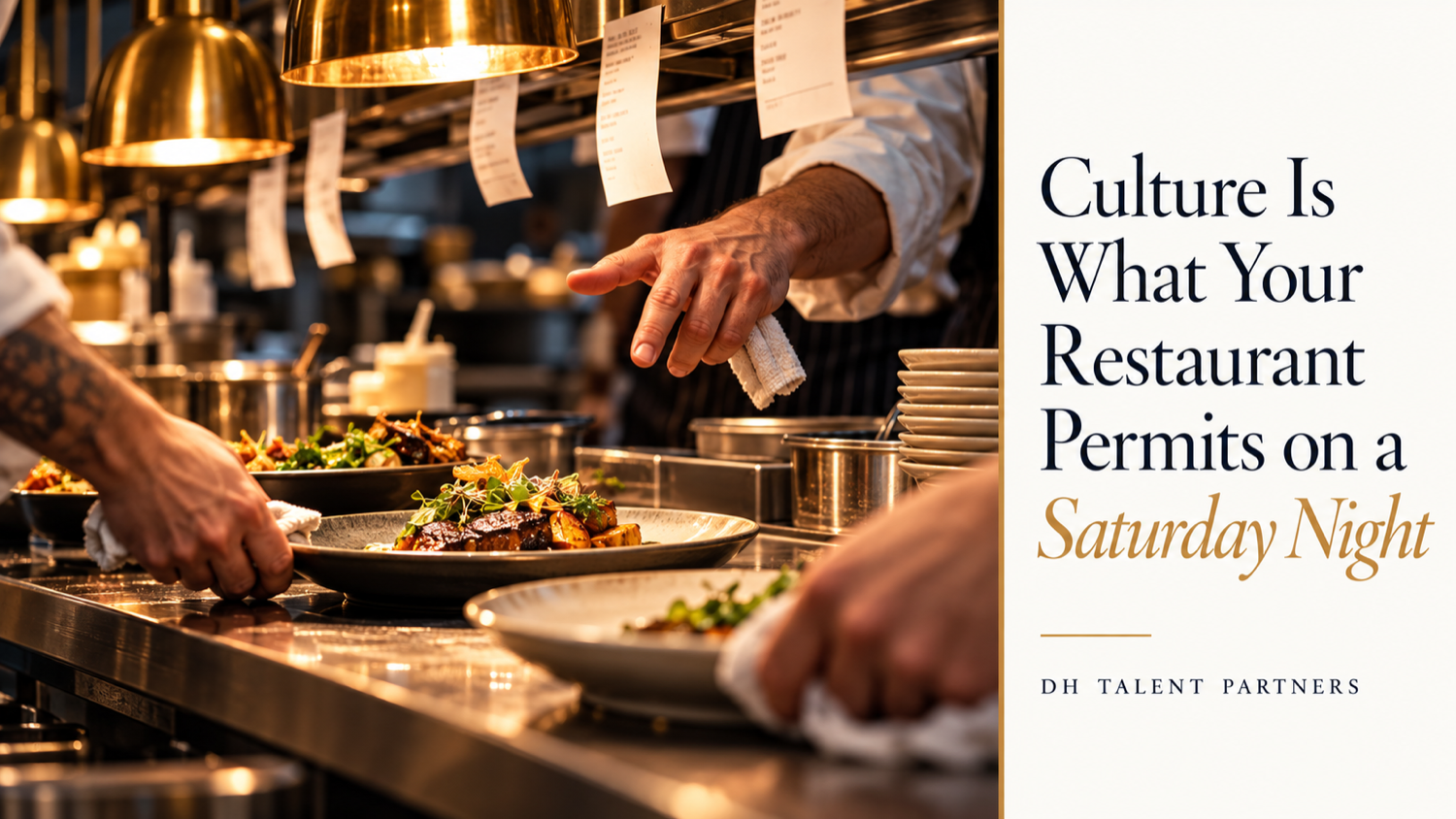
Restaurants rarely lose their culture in a conference room. They lose it during service.
A manager humiliates a server because ticket times are climbing. A chef ignores a safety standard to catch up. A high-producing employee refuses to help the team and everyone looks away. Later, leadership may call the night an exception. The employees who witnessed it understand something more important: they have learned which values survive contact with pressure.
Culture is not the language on a careers page. It is the pattern of behavior that leaders reward, correct, or quietly permit when the restaurant is busy and the stakes feel high.
The exception becomes the standard
Every operator makes compromises during a difficult service. The problem begins when emergency behavior becomes a management system. If yelling is excused because a chef is talented, the business has decided that results matter more than respect. If an employee is repeatedly scheduled despite unreliable attendance because the restaurant is short staffed, dependable employees learn that reliability earns them more work rather than more trust.
These choices create a second organization beneath the official one. The handbook may describe accountability. The schedule, promotion decisions, and manager responses teach the real rules.
Strong employees notice the gap early. They may not complain because hospitality rewards composure and adaptability. They simply stop volunteering ideas, stop covering shifts, and eventually stop imagining a future with the company.
Managers need authority before the crisis
Culture breaks down when managers are expected to protect standards without the authority to make decisions. A general manager cannot be accountable for retention if ownership reverses every difficult personnel call. A chef cannot control food quality if purchasing decisions ignore operational reality. A regional leader cannot build consistency when every location receives a different exception.
Clear authority does not mean unlimited discretion. It means leaders know which decisions they own, which require consultation, and which standards are not negotiable. That clarity matters most when there is no time for a committee meeting.
It also protects managers from becoming the face of decisions they did not make. Employees can handle an answer they dislike more easily than a chain of leaders who keep pointing upward.
Audit the moments that define you
If you want to understand your culture, do not start with a survey. Start with recent moments of pressure. Who received support? Who absorbed the consequences? Which behavior was excused? Did the post-shift conversation focus only on sales and ticket times, or did it also address how the team worked together?
Then look at who gets promoted. Promotion is one of the clearest cultural messages an organization sends. When technical performance outweighs judgment, communication, and the ability to develop others, the business eventually puts its culture in the hands of people who cannot protect it.
A healthy culture is not one where every shift goes smoothly. It is one where pressure does not erase the standards leaders claim to value. Your team is watching Saturday night much more closely than it is reading the values on the wall.
If you are hiring leaders who must protect standards under pressure, DH Talent Partners evaluates operational skill, communication style, emotional intelligence, and cultural alignment together.